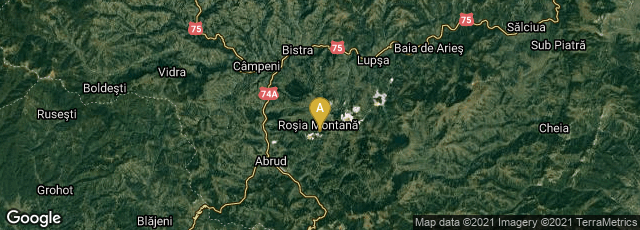
During the revival of mining in Transylvania in the 18th and 19th century 25 wax tablets from Albunus Maior (Rosia Montana) were discovered in mine shafts. They are legal documents. According to Dr. Mihaela Simion, one, dating from 164 CE, "is one of the most complete and eloquent historical and documentary sources with respect to the labor law during the Roman period (Tab. Cer. D. XI)."
From her report at http://www.capodopere2019.ro/tbliele-cerate-de-la-alburnus-maior-en.html I quote at length:
"Tab.Cer. D. XVIII (inv. no. 54186), included in the collection of the National Museum of Romanian History, is the oldest one of the Wax Tablets from Alburnus Maior. The tablet in question reveals an employment contract signed on the 6th of February 131 A.D., of which only a part of the fir-wooden triptych is still preserved (part 1 or 3, taking into account that only one side is covered with wax and has the protection frame). The incomplete text is written in Latin, with cursive letters, the tablet sizes being of 145 X 70 mm. The piece was discovered in 1854, in the Ohaba-Saint Simeon gallery, in the Cârnic massif.
"The Latin text:
"[Po]ntiano [et] Rufino co(n)s(ulibus) VIII idus Februarias Valerius Firmus /s[cripsi rogatus ab] Verzone Beusantis quod (?) di[- -]s nu[- -] /[- - - - - ]Beusantis iure [ - - - ]agro gra[ - - ] quod [ - - - - ] /[ - - ] suos feren[ - - - - ]retio Dasius Verzonis [ - - ]in[ - ]os c / [ - - - - - - - ]r[ - - - - - - ]i[ - - -]id[ - - - ]r[ - - - - - ] / ex viro gra[ - - - - - - ]ide[ - - - - - - - ]* viginti [ - ]q[ - - ] / gro gra[ - - - - - - - - - - - - - ] Beusantis [ - - - - ]f[ - - - ] / fere[ - - - - - - - - - - - - Al]burno Maiori [ - - - - - - - - ]
"Besides the elements of dating, the legible part of the text reveals the name of a jurist (the one who has written the contract), namely Valerius Firmus, who draws up a contract (an employment contract or loan agreement) for the benefit of some people with Illyrian onomasiology (Verzo, son of Beusas, two characters with Beusantis as patronymic and Dasius, the son of Verzon). It is hard to tell whether they required the services of Valerius Firmus due to the lack of knowledge of the characters from Alburnus Maior (a fact which is actually revealed in other documents from Alburnus Maior), or it is rather a common practice to choose an “authorized” jurist, as standard juridical expressions are involved.
"The second piece, namely Tab.Cer.D. XI(inv. no. 54187), is included in the same batch of wax tablets discovered in 1854, in the Ohaba-Saint Simeon gallery in the Cârnic massif. The piece was donated by the mining technician L. Diószegi to the Museum in Cluj and later became part of the collection at the National Museum of Romanian History. Dated on the 20th of May 164 A.D., the document is an employment contract (labor force renting) and is also part of a triptych (part 1 or 3, taking into account that only one side is covered with wax and has the protection frame). In some places, we notice traces of a previous writing, because the tablet was “reused” for the present form of contract. Its sizes are of 143 x105 mm and it is made of fir-tree wood. The holes for its assemblage in a triptych form are preserved.
"The text, written in Latin and with cursive letters, is quite well preserved and it also contains particular and local language and writing forms (considered to be “absurd” by the first editors of the document- for example: “it quod” instead of id quod, “dixsit” instead of dixit, “inpedierit” instead of impedierit).
"[Macri]no et Celso co(n)s(ulibus) XIII Kal(endas) Iunias Flavius Secundinus scripsi rogatus a Mem/mio Asclepi quia se lit[ter]as scire negavit it quod dixsit se locas[se] et locavit / operas s[ua]s opere aurario Aurelio Adiutori ex ha[c] die [in] Idus Novembres / proxsimas [|(denarios) se]pt(u)aginta liberisque |(denarios) [ - - HS - - mer]c[ede]m per [t]empora accipe[re] / debebit qu[as] operas sanas v[ale]ntes [ed]e[re] debebit conductori [s(upra) s(cripto)] / quod si invito condu[c]tore decedere aut c[e]ssare volue[rit dare] / debebit in dies singulos [H]S V num(mos) (a)ere octus[s(is)] c[ond]uct[or]i [si laborem] / fluor inpedierit pro rata c[o]nputare de[bebit c]onduc[tor si t]empo/re peracto mercedem sol[v]endi moram fecerit ead[em] p[oena] / tenebitur exceptis cessatis tribus / actum Immenoso Maiori / Titus Beusantis / qui et Bradua / Socratio Socra/tionis / [M]emmius Asclepi
"Translation:
"„During the consulship of Macrinus and Celsus [164 CE] May 19th, I, Flavius Secuninus, wrote this, asked by Memmius, son of Asclepius because he did not know letters, who said he had contracted himself and contracted his labor in the gold mine to Aurelius Adiutor from this day until this next November 13th, for 70 denarii and 10 for his children. During this time he may receive pay. He will be responsible to give healthy and strong labor to the conductor named above. But if he decides to leave or to be inactive against the conductor’s will he will be responsible to give for each day a fee of 5 sesterces 8 asses to the conductor. If a flood hinders work, he will be responsible to calculate pay as fixed. If by the end of the term of the lease the conductor delays making payment, he will be held to the same penalty with the excepted three day delay.
"Recorded at Immenosus Maior.
"Titus, son of Beusan, who is also Bradua
"Socratio, son of Socratio
"Memmius, son of Asclepius”
"Tab.Cer. D XI is one of the most important documents regarding the Roman world, which has been preserved up to the present day. The ethnic blend and the social heterogeneous composition stand out as a juridical statute, specific for an area in which gentes ex toto orbe romano are mesmerized by gold, in a genuine “California of Antiquity”, as Vasile Pârvan very eloquently described the Alburnus Maior area. The leaseholder, namely Aurelius Adiutor, is a Roman citizen like the jurist “writer” Flavius Secundinus, but it is difficult to identify their native area. The contract holder, namely the peregrine Memmius of Asclepios appears to have an oriental origin, although his patronymic is Greek. The other two characters immortalized in the document as witnesses, namely Titusal of Beusantis, also known as Bradua and Socratios of Socration, are also peregrines and their onomasiology indicates an Illyrian-Dalmatian origin for the former and a Greek-Oriental origin for the letter.
"As a juridical document, Tab.Cer.D. XI brings forth significant clarifications regarding the organization of the mining activity, the remuneration of the specialized labor, as well as the rights and obligations of each party; thus, it is one of the most important sources concerning the origin of “labor legislation”, as well as the history of Dacia - Augusti Provinciae."