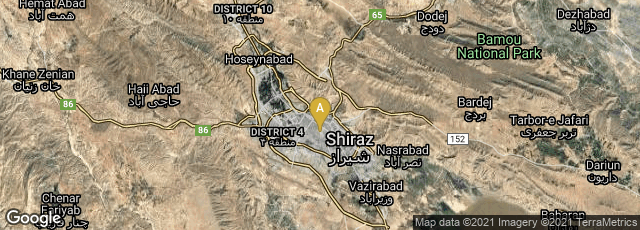
"There are two fascinating aspects to this manuscript regarding those who have seen or owned it. The first is the presence of Hebrew inscriptions on four separate leaves, giving the name of 'Abus'ad son of Joseph Ha-Cohen', presumably a Jewish physician. Medicine was a very important element of medieval Jewish learning, and Jewish doctors were very involved in the transfer of medical knowledge from the Arabic to the Latin world. Indeed, "One reason for this devotion of Jews to medicine was that the study of medical science was looked upon as a sort of religious duty" (Jewish Chronicle, 19 November 1926, p.17). A Hebrew version of this same text was sold in Sotheby's New York, 17 December 2013, lot 96. The second important aspect is the inclusion of the many reading remarks at the end of chapters which read balaghtu 'ala al-sheikh, literally 'I have reached the sheikh' (see f.81b for example). In the realms of Islamic science and medicine the title Sheikh or al-Sheikh al-Ra'is is reserved for the great Persian polymath Ibn Sina (d.1037 AD). Given the importance of this work, this copy's early date of production and royal patron, we can surmise that these phrases refer to him, suggesting that this manuscript may once have even been read by the 'leader of the wise men' himself.
"There are seven copies of the work in the Bodleian Library, none of which are complete and are dated from 1161 to 1535 AD (see E. Savage-Smith, A New Catalogue of Arabic Manuscripts, volume I, Oxford, 2011, pp.193-206, entry no.50). There is one copy written in Baghdad and dated 999 AH/1590 AD in the Museum of Islamic Art, Doha (MS.575.OL). There is a further copy dated 841 AH/1437 AD with details of contents of books I and II in Arabic, the Haddad Collection, WMS Arabic 409, see N. Serikoff, Arabic Medical Manuscripts of the Wellcome Library: A Descriptive Catalogue of the Haddad Collection, Leiden, 2005, pp.66-94. Eight more copies dated from 1303 to 1855 AD are in the Wellcome Library, see A. Iskandar, A Catalogue of Arabic Manuscripts on Medicine and Science, London, 1967, pp.119-124. Seven copies dating from 1145 to the fourteenth century are housed in the Chester Beatty Library (see A. Arberry, A Handlist of the Arabic Manuscripts, Dublin, 1959, p.83, no.3995). Another copy of the work dated 1138 AH/1726 AD exists in the Army Medical Library, see Schullian and Sommer, A Catalogue of Incunabula and Manuscripts, New York, n.d., pp.305-306, no.A26, whilst finally there are seven copies dated from 1153 AD to the eighteenth century in the British Library (see C. Baker, Subject Guide to the Arabic Manuscripts, London, 2001, M.3, pp.364-365). See also Brockelmann: GAL, i. 237 (273) and S., i. 423. All of the abovementioned manuscripts post-date the present tenth-century copy."