In 1998 the British Library purchased the
Sherborne Missal from
Ralph Percy, 12th Duke of Northumberland, for
$21,210,000. The missal is the largest and most lavishly decorated English service book surviving intact from the
dissolution of the monasteries during the Reformation.
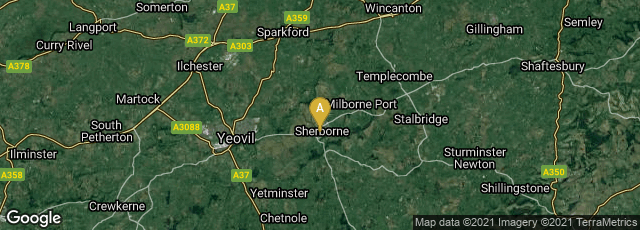
The Sherborne Missal, comprising 347 vellum leaves measuring 535 x 380 mm., and weighing 20 kg., "was commissioned by Robert Bruyning, who served as abbot at the
Abbey of St Mary in
Sherborne in
Dorset from 1385 to 1415.
[3] It was made for use at the abbey
[2] sometime between 1399 and 1407.
[4] The main scribe was a
Benedictine monk of Sherborne Abbey, John Whas.
[5] Several hands worked on the illumination but the main artist was John Siferwas, a
Dominican friar. Both of them, alongside Bruyning and his superior the
Bishop of Salisbury Richard Mitford, are depicted and named in numerous miniatures.
[6]
"The marginal decorations contain numerous high-quality drawings of British birds, including cormorants, gannets, moorhens, storks, European robins, chaffinches and mallards.
[7][8] Over a hundred leaves portray Bruyning.
Saint Wulfsige is also depicted, welcoming Benedictine monks into the chapel, marking the 998 move of the bishop's
see from Sherborne to Salisbury via
Old Sarum. Given that the scribes were thus aware of the church's history, it is likely that the missal was commissioned to commemorate Bruyning's career, but also to promote the building's history, and reinforce the public image of the church in general. Bruyning was most likely motivated by a desire to enhance Sherborne's reputation in a bid to attain funds for construction. In particular he wanted to rebuild the monks'
choir; more generally he wanted to modernise what was then a largely 12th-century building. Surviving records indicate that Bruyning undertook this task with vigour.
[3] "(Wikipedia article on Sherborne Missal, accessed 10-2020)
This is the argument that the Wikipedia presents for why the Sherborne Missal may have been created in its unique manner. When I read this in October 2020 I wondered how the illumination of a missal could have, or would have, promoted the construction of church building in the early 15th century.
In October 2020 the complete Sherborne Missal had been digitized and was available from the British Library
at this link.
A selection of portraits of Abbot Brunyng from the Sherborne Missal.
Self-portrait of John Siferwas, the artist of the manuscript, floating or kneeling in the lower margin, his habit rather humorously entwined around the border of roses. British Library Add MS 74236, p. 225 (detail)
Portraits of John Whas, the scribe, and John Siferwas, the artist, on the page for Easter Day. British Library Add MS 74236, p. 216 (detail)