In 1913 American social scientist
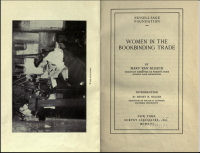
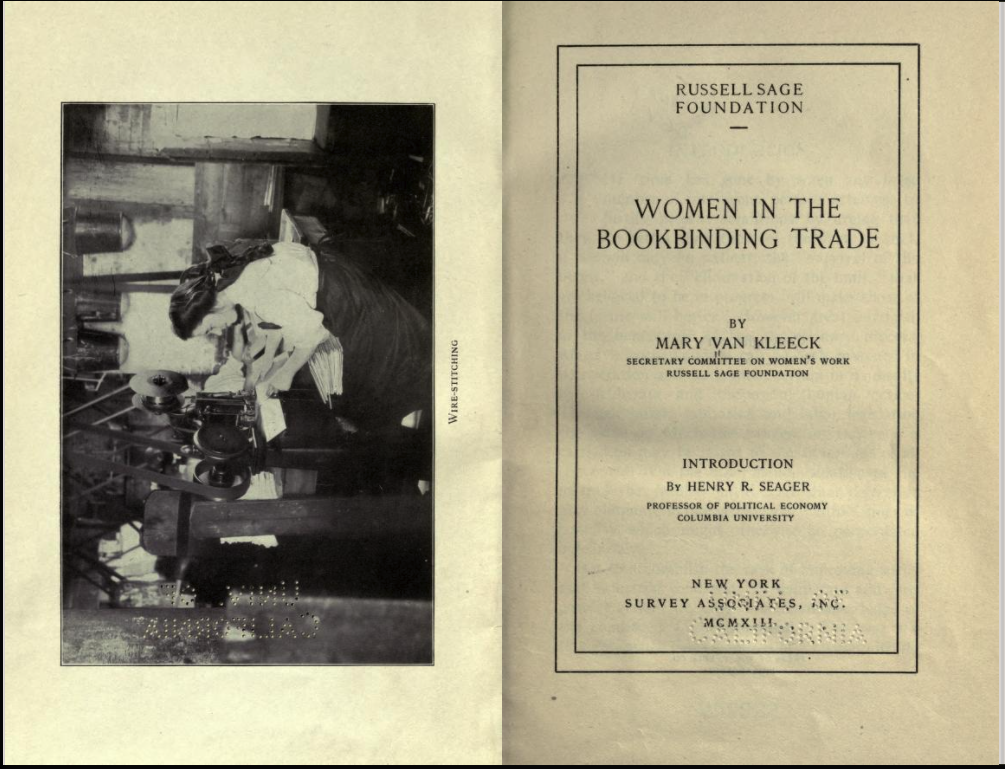
Mary van Kleeck, Secretary of the Committee on Women's Work of the
Russell Sage Foundation, issued an extensively illustrated book entitled
Women in the Bookbinding Trade. As I have frequently learned in writing
HistoryofInformation, the socio-economic conditions of workers in the printing, papermaking, typesetting, and bookbinding industries were far less well documented than the histories of these trades as handcrafts. It is possible that van Kleeck's 270-page book focusing on the trade as practiced in New York City was the first comprehensive study of the industrial processes and working conditions of bookbinding for either sex. At the time hand bookbinding practices occurred side-by-side with the use of bookbinding machines. On p. 2 van Kleeck points out that according to the 1900 U.S. census 15,000 women were employed in the bookbinding trades in the United States. As one would expect, women in the bookbinding trade were exploited with respect to working conditions and pay, a problem that persisted in certain occupations well into the 21st century. At the time the standard work week was 60 hours; however, van Kleeck reports instances of women being forced to work 24.5 hours on certain single days.
Because the photographs that van Kleeck published were so descriptive I decided to reproduce a large selection of them with this entry.
Running a wire-stitching or stapling machine.
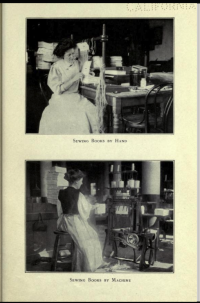
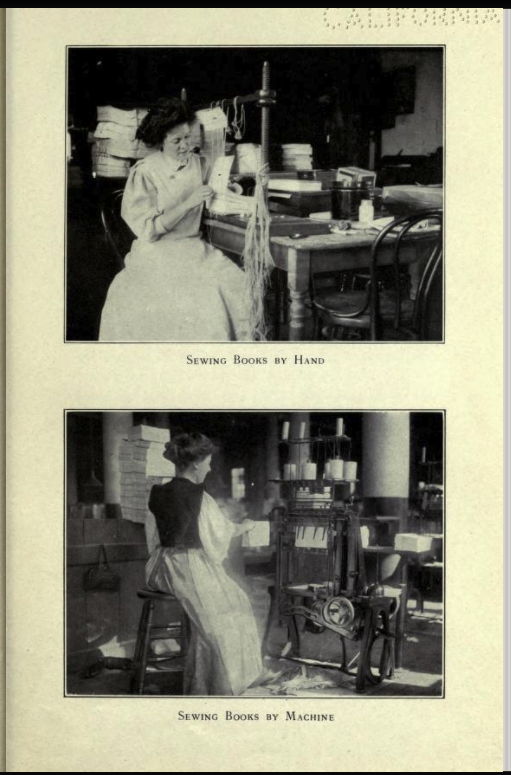
Sewing books by hand, below which we see a photograph of a woman sewing books by machine.
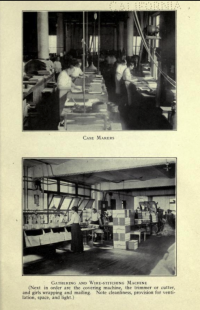
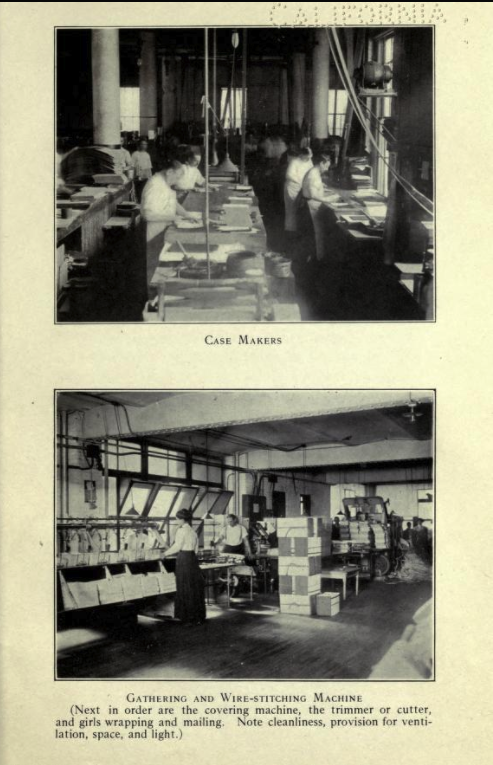
The upper photograph shows "case makers." Beneath that is "gaterhing and wire-stiching machine." That caption emphasizes that in this particular instance the workspace is clean, well-ventilated and well lit with adequate work space.
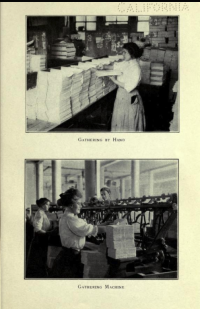
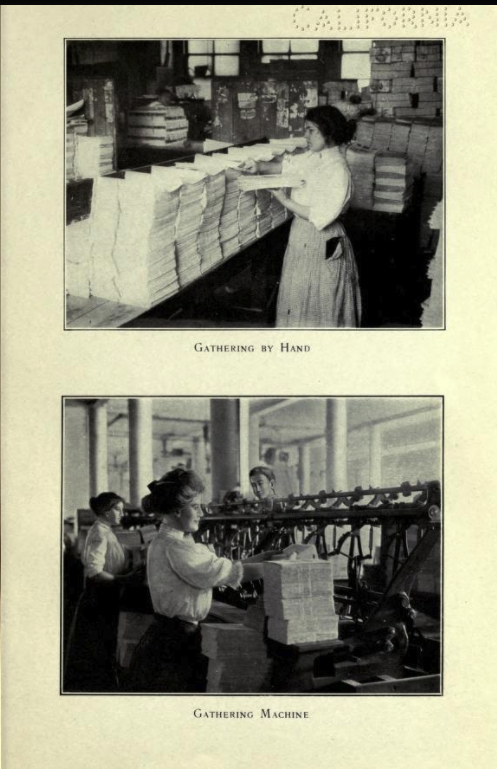
Gathering folded sheets by hand, beneath which is operating a "gathering machine."
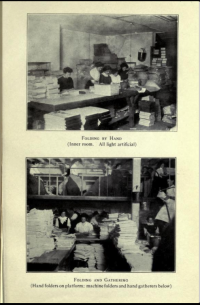
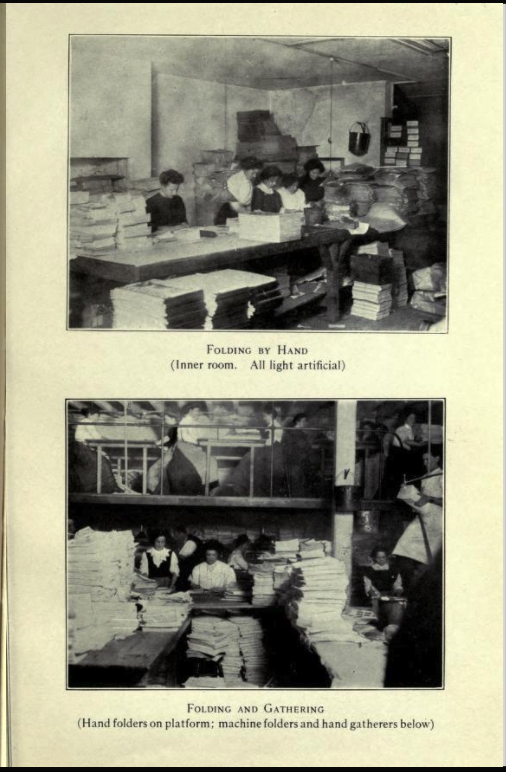
Folding by hand, above which is another view showing hand folders on a platform and machine folders and hand gatherers below. Here we begin to see less than desirable working conditions.
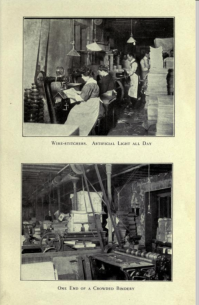
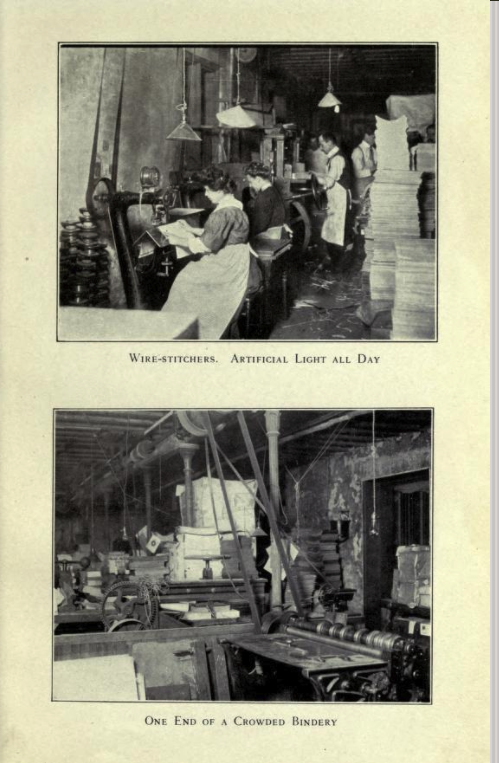
"Wire-stitchers. Artificial light all day," beneath which is "One end of a croweded bindery." Less than ideal working conditions.
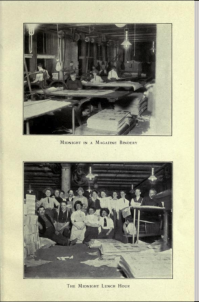
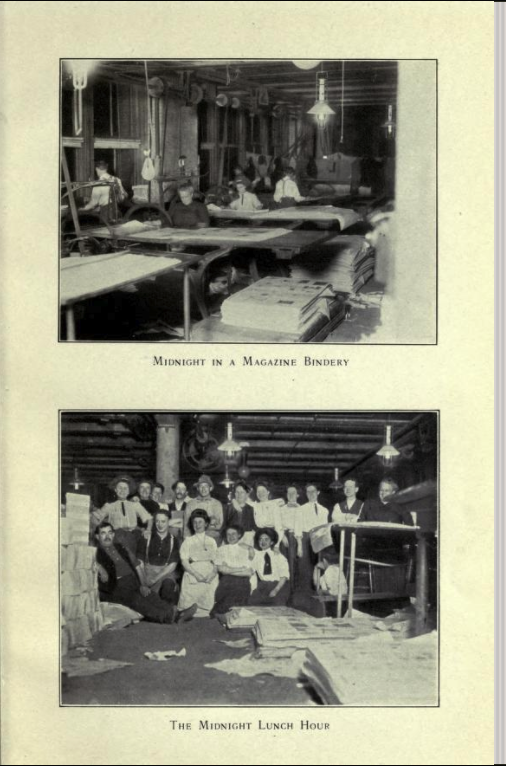
"Midnight in a magazine bindery," beneath which is "The midnight lunch hour." Clearly these were undesirable working hours.
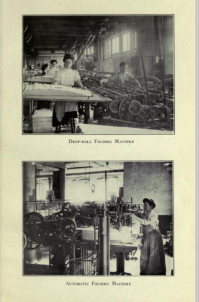
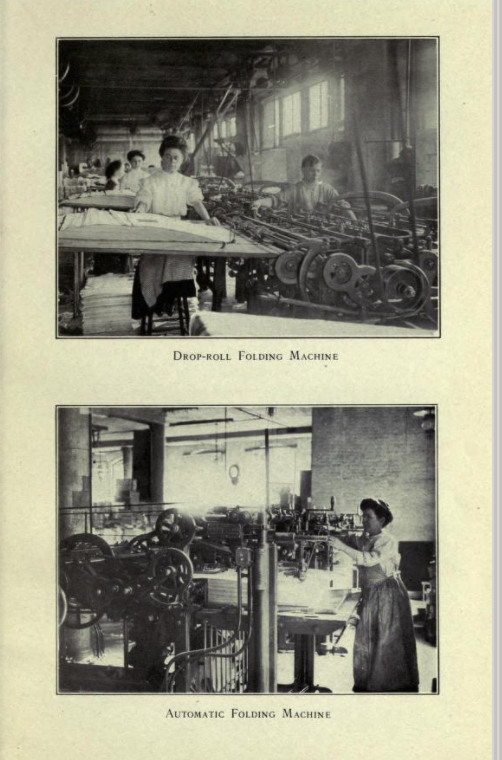
"Drop-roll folding machine" beneath which is "Automatic folding machine."
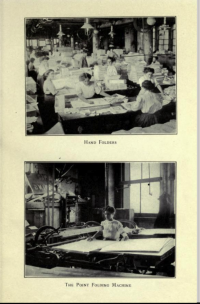
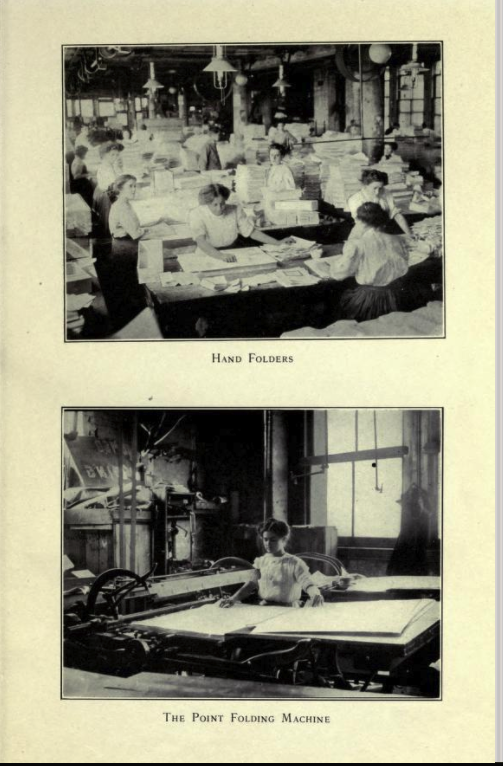
"Hand folders" beneath which is "The point folding machine."