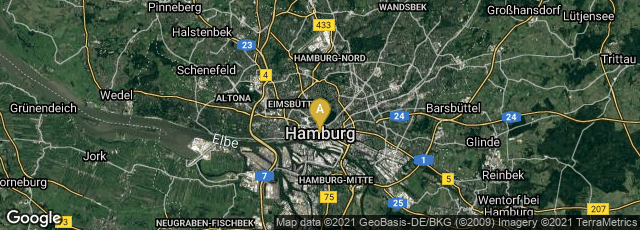
Beginning in 1972 inventor and software developer
Peter Karow developed a type design system called Ikarus at the Hamburg-based firm URW Software & Type GmbH. The origin of this concept can be traced back to the company Aristo and their “Coordinatograph with numerical continuous path control,” a device introduced in 1959 that was used to plot and cut complex shapes on ‘Rubylith’ masking film produced by the Ulano Corporation. In 1972 the entrepreneur Walter Brendel developed the idea of using Aristo’s flatbed plotter to automatically cut master patterns for quick and precise reproductions of letterforms in phototype technology, for which he consulted the engineer Karow at URW. Karow observed that what seemed sufficient for designing splines, or the streamlined outer skin of ships, would also work for letter forms. Inspired by interpolation theory, Karow developed a working process at URW called ‘hand-digitization’ using a digitizing tablet and a sensor to trace marks on analog drawings of letterforms, transforming them into digital vector outlines. According to the Wikipedia article on Peter Karow, after inventing digitization of outlines for typefaces in 1972, Karow developed software to calculate the first variations of fonts in 1973, software enabling interpolation of typefaces also in 1973, for the embroidery of text in cloth in 1975, for the calculation of bitmap fonts (rasterizing) in 1975, and also software for character hinting in 1975.